Becoming Who You Are:
Marie-Louise von Franz on The Process of Individuation
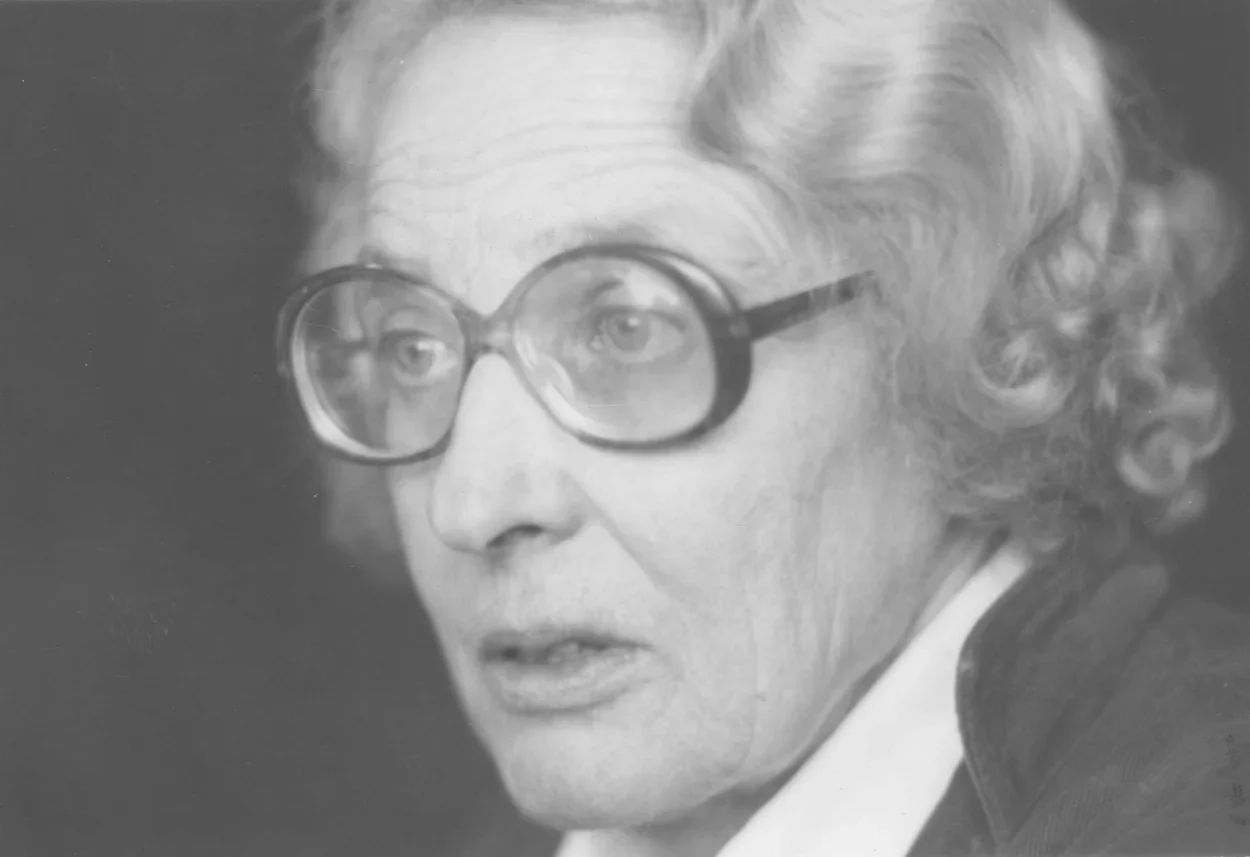
An intensive two-hour exploration into the dynamics, stages, and psychological realities of individuation as articulated by Carl Jung’s closest collaborator.
by Lyna Tevenaz Jones, M.A.
Format
Live Online Workshop
Duration
Two hours
Date & Time
November 22, 12:00pm - 2:00pm PST | 9-11PM CET
The Journey Toward Wholeness
Who are you becoming beneath the roles, expectations, relationships,
and defenses that have shaped your life?
Marie-Louise von Franz understood individuation as a lifelong process of becoming more conscious of the person one is uniquely called to become.
It involves discovering a personal sense of meaning, developing a relationship with the deeper organizing center of the psyche, and learning to live with greater awareness of the parts of ourselves we have overlooked or kept outside our conscious identity.
In this class, we’ll explore von Franz’s understanding of individuation as a process that touches the whole of life: our development, our conflicts, our relationships, our values, and our search for meaning. We’ll consider how a person’s path takes shape in conversation with both the inner world and the demands of shared life.
Individuation is not self-improvement
Individuation is frequently misunderstood as a self-improvement project or an egoic pursuit.
Marie-Louise von Franz emphasized the uncompromising depth of this process: an encounter with the unconscious that challenges the ego's assumptions and demands genuine psychological engagement.
In this focused two-hour seminar, we will explore Marie-Louise von Franz’s distinctive contributions to our understanding of individuation.
Drawing on her extensive work with fairy tales, dreams, and clinical material, we will examine the autonomous nature of the unconscious, the relationship between the ego and the Self, and the psychological challenges involved in becoming more conscious of who we are.
Marie-Louise von Franz on Individuation
What we’ll explore
The movement toward wholeness: How individuation differs from simply growing older, adapting to social expectations, or trying to become an idealized version of oneself.
The question of singularity: What it means to discover and live one’s own path, while remaining accountable to other people and the wider world.
The shadow and projection: How disowned parts of ourselves can shape our judgments, conflicts, and relationships—and what changes when we begin to recognize them.
The Self and the psyche’s organizing center: How von Franz understands the Self, and why images of wholeness can appear in dreams, myths, and religious traditions.
Conflict and transformation: Why some inner conflicts cannot be settled by reason or will alone, and how a person may change through sustained attention to them.
Individuation in relationship: How becoming more inwardly grounded can deepen our capacity to see others as they are and meet them more fully.
The search for meaning: The religious and numinous dimension of individuation in von Franz’s thought.

The Psychology of Projection is a two-part online webinar series exploring projection as a central psychological mechanism through which unconscious aspects of the personality are experienced through others.
Drawing on Jungian psychology, psychoanalytic thought, object relations theory, and clinical understanding, this series examines how projection shapes attraction, idealization, emotional triggers, conflict, admiration, and relational dynamics. Participants will explore both the recognition of projection and the transformative process of withdrawing projection and reclaiming projected aspects of the self as part of psychological integration and individuation.
The series registration includes live teaching for both workshops, recordings, PDF presentations, reflective exercises, and access to the private Q&A discussion space following each session.
What You'll Receive
The workshop registration includes live teaching, a recording, the PDF presentation, and reflective exercises to support ongoing psychological insight and integration.
Immediately after purchase, you will receive a downloadable PDF containing simple instructions for accessing your course portal. From there, you'll be able to view the workshop recording at your convenience and download all accompanying materials.
Part I: The Nature and Recognition of Projection
Recording now available for purchase down below

Registration includes access to the live 2-hour interactive workshop, course reference notes, and a curated reading list of von Franz’s primary works.
The Nature and Recognition of Projection is a 90-minute online workshop exploring projection as a central psychological mechanism through which unconscious aspects of the personality are experienced through others.
Drawing on Jungian psychology, psychoanalytic thought, and clinical understanding, this workshop examines how projection appears in attraction, idealization, emotional triggers, admiration, conflict, and relational dynamics. Participants will learn to recognize the signs that a projection may be active and develop a deeper understanding of the psyche’s tendency to externalize unrecognized inner contents.
What You'll Receive
Immediately after purchase, you will receive a downloadable PDF containing simple instructions for accessing your course portal. From there, you'll be able to view the workshop recording at your convenience and download all accompanying materials, which includes the recording, PDF presentation, and self-reflective guide.
Part II: Withdrawal of Projection and Reclaiming the Projected Self
August 16th, 2026 | 11:00 AM – 1:00 PM PDT

Once a projection has been recognized, how do we begin to take it back?
This workshop explores the psychological process of withdrawing projection, tolerating disillusionment, and reclaiming projected qualities as part of one's own developing personality.
Participants will be introduced to practical and reflective approaches for supporting integration and cultivating a more conscious relationship to themselves and others.
In this class, we will explore:
In this class, we will explore:
How to recognize when a projection has been constellated, including the emotional and psychological signatures that often accompany it.
How to distinguish the actual person from what the unconscious has placed upon them - and begin seeing the other more clearly.
The psychological process of withdrawing a projection once it has been recognized.
Why disillusionment is often an essential, and sometimes painful, part of this process, and what becomes possible when we can tolerate it.
How to identify what another person may be carrying for us: our worth, authority, vitality, creativity, capacity to love, or unlived potential.
Why recognizing a projection is not the same as integrating it, and how we can begin to reclaim and embody qualities that were previously experienced as belonging to someone else.
How projection can keep us psychically bound to someone long after a relationship has ended, and how withdrawing projection can support the process of separation and letting go.
Withdrawal of Projection and Reclaiming the Projected Self is a 2-hour online workshop exploring the psychological process of withdrawing projection and integrating disowned or externalized aspects of the personality.
Drawing on Jungian psychology, psychoanalytic thought, and clinical understanding, this workshop examines the often difficult but transformative movement from idealization and unconscious attachment toward greater psychological integration and self-recovery. Participants will explore the emotional reality of disillusionment, the reclaiming of projected qualities, and the development of a more conscious relationship to self and others.
What You'll Receive
The workshop registration includes the class recording, a recording, the PDF presentation, and reflective exercises to support ongoing psychological insight and integration.
Immediately after purchase, you will receive a downloadable PDF containing simple instructions for accessing your course portal. From there, you'll be able to view the workshop recording at your convenience and download all accompanying materials.
What to expect…
Each workshop includes approximately 90 minutes of teaching, reflection, and depth psychological exploration, followed by a private 30-minute Q&A and discussion space for participants.
These workshops are designed to be intellectually rigorous while remaining accessible and grounded in lived psychological experience. Drawing from Jungian psychology, psychoanalytic thought, and clinical understanding, the material will explore both the theory and lived reality of projection as it appears in relationships, attraction, idealization, emotional triggers, conflict, and everyday life.
Participants can expect a combination of:
Lecture and teaching
Clinical and archetypal examples
Reflective questions and journaling prompts
Opportunities for personal insight and self-observation
Guided exploration of psychological patterns and relational dynamics
The emphasis of this series is not on pathologizing projection, but on understanding it as a natural psychological process that can become a powerful catalyst for greater consciousness, psychological integration, and more authentic relationships to self and others.
The final 30 minutes of each workshop will be reserved for private participant discussion and Q&A. This space is intended to allow for deeper reflection, questions, and integration of the material in a more personal and conversational format.
Please note that these workshops are educational in nature and are not a substitute for psychotherapy or mental health treatment.
About me
Lyna Tevenaz Jones is a psychodynamic and Jungian-informed therapist specializing in depth work with adults and adolescents. In my clinical work, integrate attachment theory, internal family systems, archetypal psychology, and affective neuroscience. My thesis research explored how symbolic imagery and active imagination can restore connection to the Self in the healing of childhood trauma and attachment wounds.

Taking good care of your psyche and your body.
This lecture is intended for educational and self-reflective purposes only and is not a substitute for individual therapy or professional mental health treatment.
By participating, you acknowledge that any emotional material that may arise is your responsibility to process, and it is strongly recommended that you engage in ongoing personal therapy for deeper integration. While care has been taken to create a safe and thoughtful experience, I am not liable for any psychological discomfort or triggering that may occur. Please honor your own boundaries and seek support from a licensed therapist if needed.
The unconscious is not neutral; it carries both light and shadow, and engaging with it requires reverence, humility, and a grounded internal container. For this reason, we will not be practicing active imagination together live.