
The Psychology of Projection
Understanding the Mechanisms of Projection and the Process of Psychological Integration
by Lyna Tevenaz Jones, M.A., ACMHC
Self-Image from the Inside Out: Repairing Self-Image Through Depth Psychology Workshop
Online Workshop
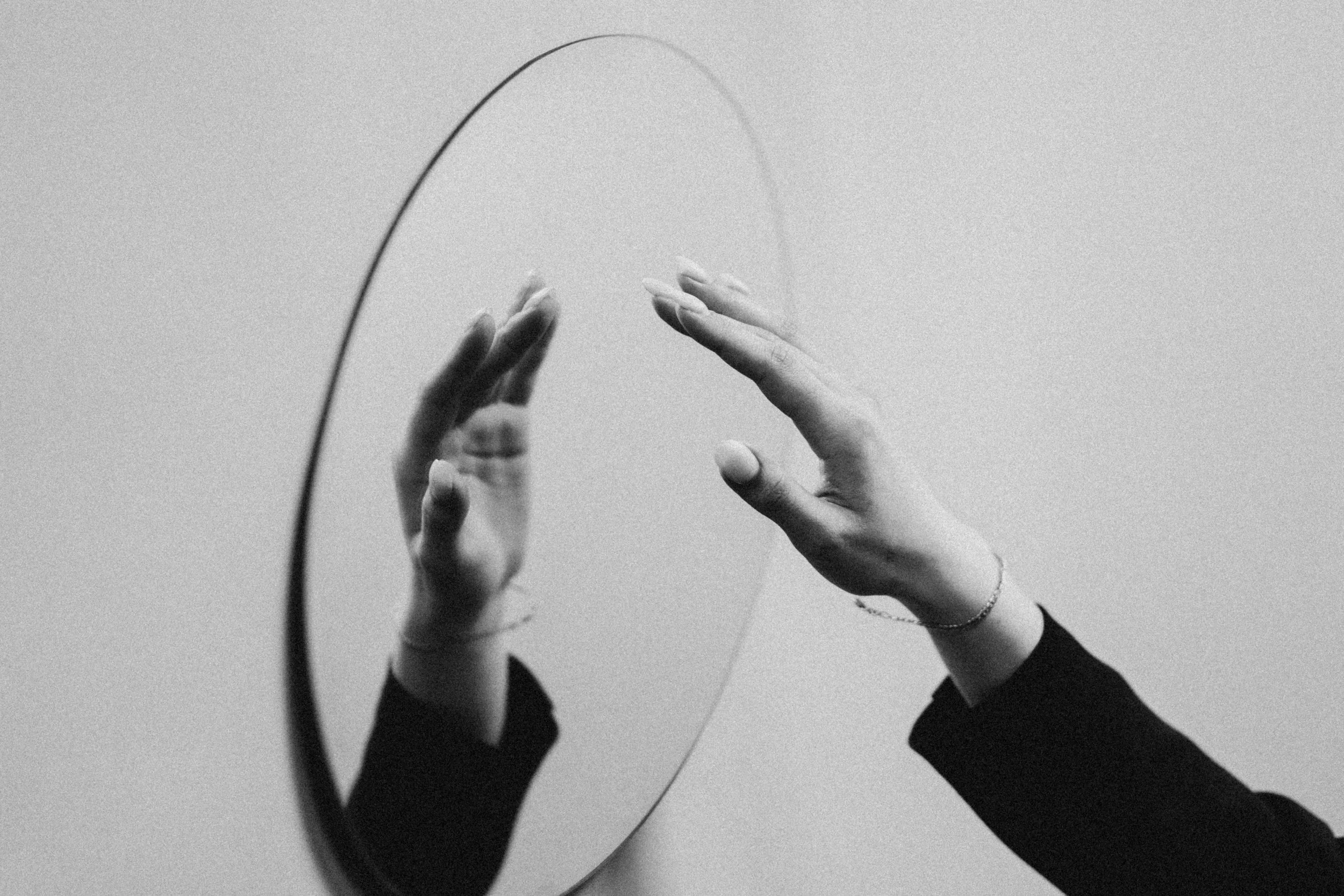
Reprogramming our self-image is often an integral part of the individuation process—especially when early internalized messages have created a distorted mirror of who we are.
What we refuse to look at within ourselves will inevitably meet us on the outside as fate.
Why do certain people occupy such a disproportionate amount of psychic space in our lives?
Why do we find ourselves captivated, idealizing, resentful, or emotionally entangled with particular individuals?
Why do some relationships seem charged with a significance that exceeds the reality of who the other person is?
Depth psychology suggests that these experiences are often rooted in projection.
Projection is a natural and largely unconscious psychological process through which aspects of the inner world are experienced as belonging to someone or something outside ourselves.
The qualities we most admire, long for, fear, reject, or struggle to recognize within ourselves are often encountered first through others.
To protect us from the discomfort of our own unintegrated traits, the unconscious mind seeks out "hooks" in our environment, magnifying the flaws or the brilliance of others while keeping us blind to our own reflection.
The result is a profound loss of personal power, fractured relationship with oneself, and chronic psychological fatigue.
Although projection is a normal and necessary aspect of psychological development, remaining unconscious of it can leave us vulnerable to idealization, disappointment, repetitive relationship patterns, emotional reactivity, and a diminished sense of our own inner authority.
The withdrawal of projection is therefore not merely an intellectual exercise but a central task of psychological growth and individuation.
This two-part workshop series offers a depth psychological exploration of projection and the process of reclaiming what has been unconsciously attributed to others.
Drawing from Jungian psychology, psychoanalytic thought, and contemporary clinical understanding, participants will learn to recognize projection in everyday life, understand its underlying function, and begin the process of integrating projected aspects of the personality.
Part I: The Nature and Recognition of Projection

This workshop examines the nature, function, and manifestations of projection. Participants will learn how projection operates in relationships, idealization, emotional triggers, admiration, attraction, conflict, and everyday interpersonal dynamics.
Particular attention will be given to recognizing the signs that a projection may be active and distinguishing projection from perception.
Part II: Withdrawal of Projection and Reclaiming the Projected Self

Once a projection has been recognized, how do we begin to take it back?
This workshop explores the psychological process of withdrawing projection, tolerating disillusionment, and reclaiming projected qualities as part of one's own developing personality.
Participants will be introduced to practical and reflective approaches for supporting integration and cultivating a more conscious relationship to themselves and others.
What to expect…
This workshop is a psychoeducational experience designed to deepen your understanding of how self-image and self-concept are formed, distorted, and repaired. Rather than a guided meditation or visualization session, this workshop focuses on clinically grounded insights and practical strategies you can use to begin transforming the way you see yourself.
Here is what you can expect from the presentation:
Theoretical Foundations
A concise but comprehensive exploration of how self-image develops from a psychological perspective, drawing on Self Psychology, Winnicottian theory of the true and false self, attachment theory’s insights on secure and insecure patterns, Jungian concepts of persona, shadow, and archetypes, and Internal Family Systems’ (IFS) model of inner parts. We will discuss how early relationships and social influences shape our self-concept and why some people develop harsh, unstable, or fragmented self-images.The Steps of Active Imagination.
The Dynamics of Negative Self-Image
We will break down how internalized critical voices, unmet attachment needs, perfectionism, and social comparison reinforce patterns of low self-worth—and how these patterns can be gently challenged and rewired.
Clinical Strategies for Rebuilding Self-Concept
Presentation of practical, research-informed methods you can apply to support a healthier sense of self, including:
Increasing self-awareness of old patterns
Shifting from self-criticism to self-compassion
Engaging in self-reflective exercises to clarify your true values, strengths, and identity beyond appearance or external validation.
The Ascending Spiral
Meeting your own Myth
Meaning-making
About me
Lyna Tevenaz Jones is a psychodynamic and Jungian-informed therapist specializing in depth work with adults and adolescents. In my clinical work, integrate attachment theory, internal family systems, archetypal psychology, and affective neuroscience. My thesis research explored how symbolic imagery and active imagination can restore connection to the Self in the healing of childhood trauma and attachment wounds.

🔍 What You’ll Learn
The Self-Image is rooted in how we were mirrored by attachment figures
Our sense of self doesn’t form in isolation—it develops through relationships, especially the early mirroring we received (or didn’t) from caregivers. You’ll explore Heinz Kohut’s concept of selfobjects—people or experiences that help build a cohesive self—and how deficits in empathic mirroring can leave us with a fragile or critical self-image. Understanding this helps normalize why you might still struggle with self-worth today, even if your life looks successful on the outside.
Restoring the Cohesive Self
Drawing on Ernest Wolf’s clinical contributions in Treating the Self, we’ll discuss how therapy and conscious inner work can provide emotionally corrective experiences that gradually strengthen the self by giving it what it missed in early development—attunement, acceptance, and emotional resonance. You’ll learn how this process helps reestablish a cohesive, stable self-image.
The Power of Symbolic Thinking to Reshape Self-Concept
Building on Jungian and Winnicottian ideas, we’ll explore how our inner world communicates through image, metaphor, and symbolic narratives—not just rational thought. These unconscious stories about who we are can keep us stuck in cycles of shame and self-criticism—or, when explored with compassion, become doorways to transformation.
How Early Experiences Wire the Brain and Self-Concept
Modern neuroscience confirms what Self Psychology and depth theories have long taught: our brains encode relational experiences into emotional memory. When selfobject needs go unmet, our nervous system learns to expect rejection or criticism, wiring patterns of self-doubt and distorted self-perception. We’ll explore how emotionally meaningful, attuned experiences—whether with others or within ourselves—can begin to rewire these patterns and create a more positive self-image.
Why Self-Compassion is More Effective than Self-Criticism
We’ll discuss research showing that self-compassion, not perfectionism, is the key to lasting motivation, emotional regulation, and healthy self-image. You’ll learn tools to identify critical inner voices, unblend from them (using IFS-informed strategies), and offer yourself the kind of support that fosters secure self-worth.
Integrating the Persona and the Shadow
Drawing from Jung, we’ll look at how the persona (the social mask) and shadow (the parts we disown) interact to shape self-image. By understanding and integrating these dynamics, you can move toward a more authentic, stable sense of identity—one rooted in your true self rather than external expectations.
Building a Living Relationship with the Self
Finally, you’ll learn how to cultivate a sustaining relationship with your Self—what Kohut called the nuclear self—as a reliable source of inner security, mirroring, and guidance. This relationship allows your psyche to reorganize around truth, worthiness, and authentic self-esteem, rather than outdated wounds or social pressures.
Why this is important
Your self-image and self-concept—how you see yourself and what you believe about who you are—form the foundation of your mental health, relationships, and life satisfaction. When these are fragile, overly negative, or based on outdated messages from childhood, they can lead to chronic self-doubt, anxiety, depression, perfectionism, and unfulfilling relationships.
Healing and strengthening your self-image and self-concept helps you develop a stable, compassionate sense of self—so you can move through life with greater confidence, resilience, and authentic connection to your true worth.
Photo by Михаил Секацкий on Unsplash
Self-Image & Self-Concept: A Depth Psychological and Neurobiological Approach
Join this 90-minute interactive workshop exploring how our sense of self—our self-image and self-concept—is formed, distorted, and repaired. Drawing on Self Psychology, Winnicottian theory, attachment theory, Jungian concepts, and Internal Family Systems (IFS), this presentation bridges clinical insight with symbolic depth to offer a powerful pathway toward healing and transformation.
Rooted in depth psychology and supported by modern neuroscience, this workshop will help you understand why so many of us carry critical or unstable views of ourselves—and how to begin creating a more cohesive, compassionate sense of self.
You’ll learn:
How early relationships shape the self-image and self-concept we carry into adulthood.
How people often use defense mechanisms to manage shame or anxiety related to body image (e.g., projection, denial, idealization of others’ bodies, devaluation of their own).
Why negative self-image persists even when external circumstances improve.
How symbolic thinking, archetypes, and imagery impact emotional memory, identity, and self-worth.
The role of the limbic system, autobiographical memory, and the brain’s Default Mode Network in maintaining or transforming self-concept.
Why emotionally meaningful, symbolic, and relational experiences can rewire self-perception more effectively than logic or willpower alone.
The impact of modern society on women’s self-image and how to protect our psyches against societal injunctions.
This workshop offers a unique integration of clinical research, psychological theory, and experiential tools to help you move beyond outdated self-criticism and begin cultivating an authentic, confident relationship with yourself.
Refund policy for sessions
Please note that all registrations are final and non-refundable.
Depth psychology values commitment and containment. When someone signs up, it’s often part of a deeper, unconscious process—a psyche-level contract. A no-refund policy reinforces the idea that once a commitment is made, the work begins, even if resistance or ambivalence surfaces later.
No changes, transfers, or cancellations will be accepted once you have registered. In the unlikely event that the workshop is canceled, you will be contacted via email and offered an alternative of equivalent value.
For any questions regarding our policies, feel free to reach out at lyna@womenofdepthpsychology.com.
What you get:
Full workshop recording,
35-slide PDF presentation that captures the key insights
12-page inner-work prompts workbook to help you integrate the material into daily life.
Price: $55

Drawing from Self Psychology, Winnicottian theory, attachment research, Jungian concepts, and Internal Family Systems, this workshop goes beyond surface-level fixes to explore the real foundations of self-image and self-concept. You’ll learn how early relationships, internalized messages, and social pressures shape your self-perception—and how to transform critical, outdated narratives into a compassionate, authentic sense of self.
Taking good care of your psyche and your body.
This lecture is intended for educational and self-reflective purposes only and is not a substitute for individual therapy or professional mental health treatment.
By participating, you acknowledge that any emotional material that may arise is your responsibility to process, and it is strongly recommended that you engage in ongoing personal therapy for deeper integration. While care has been taken to create a safe and thoughtful experience, I am not liable for any psychological discomfort or triggering that may occur. Please honor your own boundaries and seek support from a licensed therapist if needed.
The unconscious is not neutral; it carries both light and shadow, and engaging with it requires reverence, humility, and a grounded internal container. For this reason, we will not be practicing active imagination together live.